Repairing the Ruins in Brazil
By Lucas Evangelista
In the mid-16th century, while the Inquisition was burning books and bodies of those who dared embrace the Reformation, a group of men and women decided to journey across the Atlantic. These were the Huguenots—persecuted French Calvinists. These brothers in faith crossed the ocean with a bold purpose: to build a New Jerusalem in the Americas.
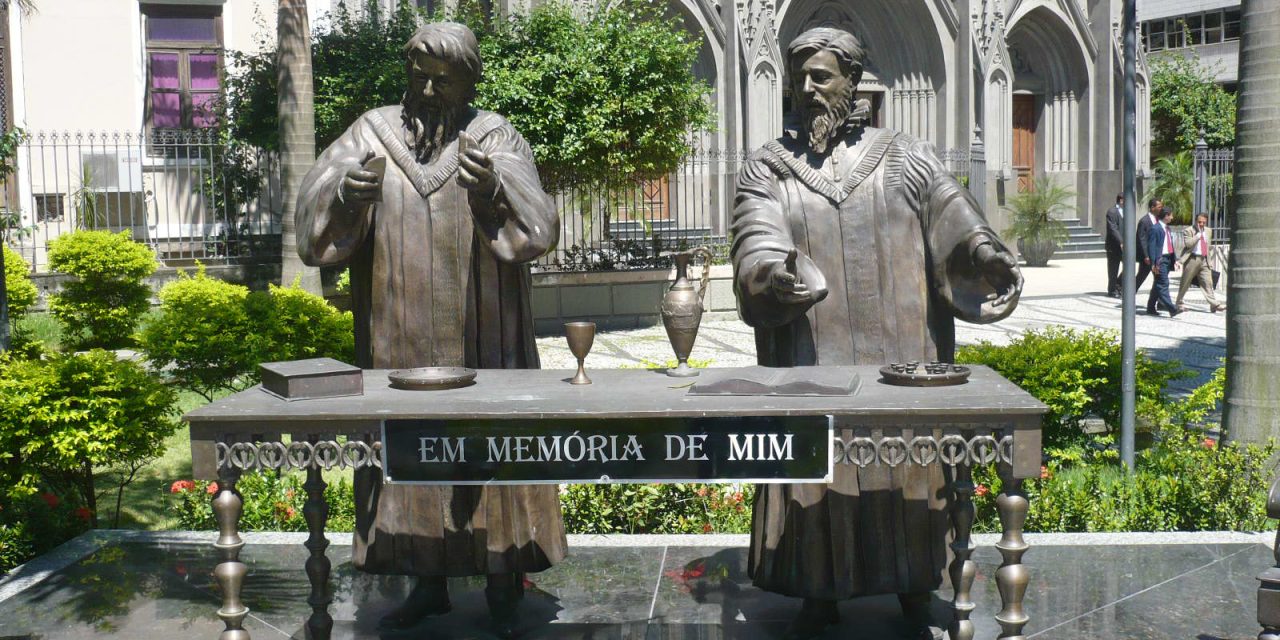
In Guanabara Bay, under the leadership of Nicolas Durand de Villegagnon, the colony of France Antarctique was established in 1555. Psalms echoed among the tropical palms, revealing the true heart of this colony—not in its walls or cannons, but in the fervent desire to see Christ as King in a land where the gospel could be freely preached and where the people could know the Word of God in their own tongue. There, on Brazilian shores, the first Protestant celebration of the Lord’s Supper in the Americas took place.
However, the colony was short-lived, lasting just over a decade. Betrayed by Villegagnon, who turned against his own brethren, and crushed by the military power of the Portuguese Crown in 1560, the Huguenots were scattered—some killed, others enslaved, and many fled into the hinterlands.
Yet, the seed had been sown. While imprisoned and before martyrdom, Jean du Bourdel, Matthieu Verneuil, Pierre Bourdon, and André la Fon—Genevan theologians sent to the new colony—wrote what would become the first Reformed confession of faith in the Americas: the Guanabara Confession. It affirmed the Trinity, total depravity, sovereign grace, the sacraments according to Scripture, and the supremacy of Christ as the only Mediator.
The memory of the Brazil they sought to build was brutally interrupted and deliberately silenced by narratives that would later pave the way for secular ideological projects. Marxist ideas came to dominate Brazil’s educational and political thought, promoting a statist and openly anti-Christian culture.
The results are plain to see. Today, Brazil ranks among the countries with the highest tax burden in South America, propping up a bloated and inefficient government. At the same time, it holds the 65th position out of 81 countries in the most recent PISA ranking of education quality.
And yet, anyone who thinks the gospel was stifled is mistaken. Though pushed to the margins, the gospel spread. Churches were planted, hearts were regenerated—even in the most remote and forgotten corners of the nation, such as Floriano, a city in the arid backlands of Piauí, where the light of Christ shone with quiet yet irresistible faithfulness.
You may ask: why does Floriano matter to this story? Because, by divine providence, it was there that one of Brazil’s first classical Christian schools was born: Mercês Alencar Christian School, or ECMA. Built by the hands of brothers from a small church with just over 100 members and lacking proper resources and infrastructure, the school was birthed from the efforts of families committed to a greater calling—shaping hearts and minds in the light of Scripture. The school bears the name of Maria Mercês Alencar, a faithful literacy teacher who evangelized some of the first converts in the region.
My wife and I had just moved to the city and were beginning our ministry journey there. We began to study as best we could. We had already heard about Classical Christian Education and the confessional school movement in the U.S. However, there was very little literature in Portuguese about it—only a few translated books, mostly focused on homeschooling. Even with limited knowledge, we became convinced that this was the path to follow: an education rooted in the Reformed faith, integrating spiritual and intellectual life under the light of Scripture.
In 2018, we were surprised to learn of a Classical Christian Education conference happening in São Paulo, and we discovered we were not alone; others, too, were founding classical schools in Brazil.
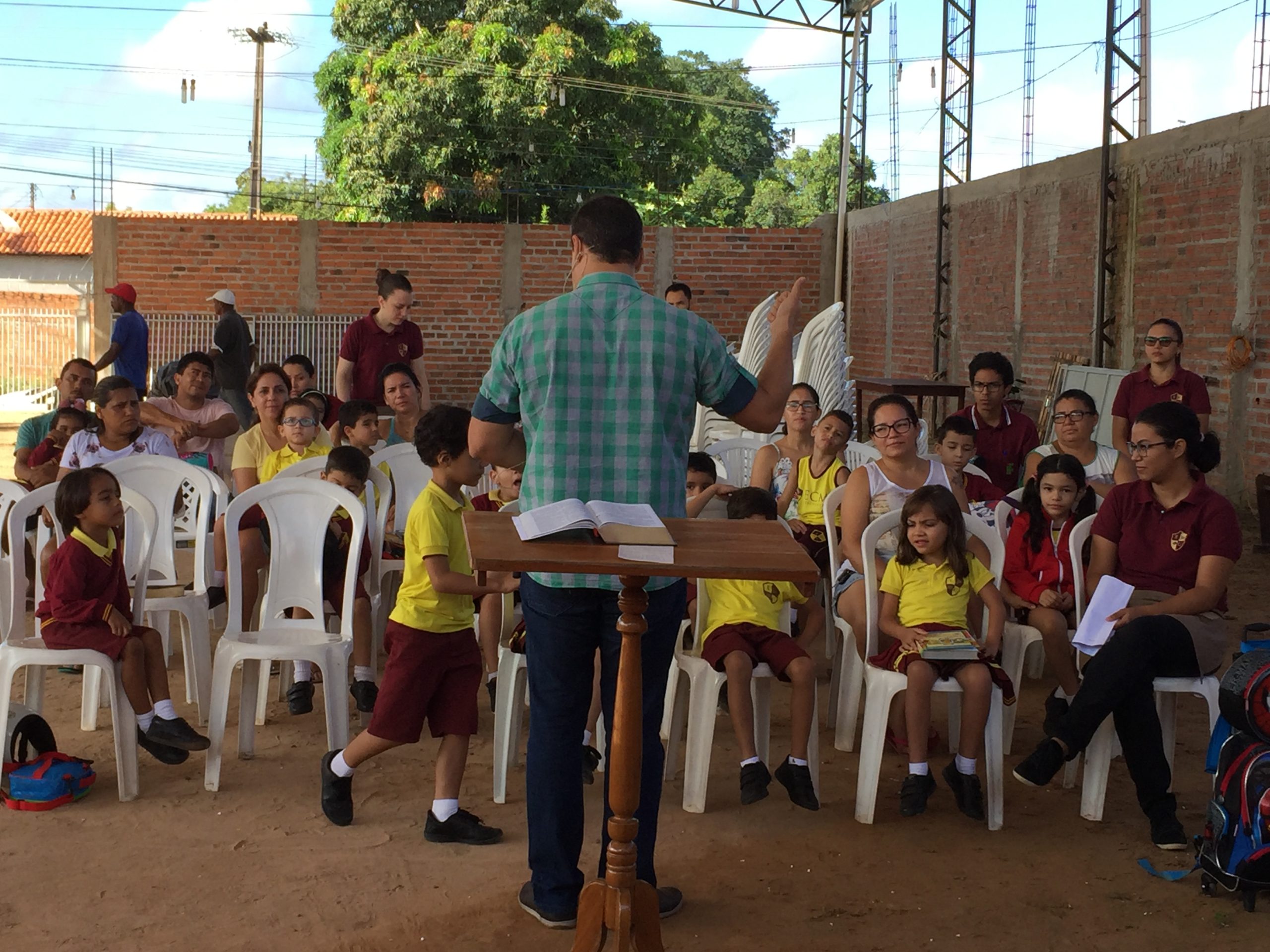
Soon after, God in His providence continued to clear the path, strengthening us in grace and providing daily what was needed to continue the work. He sent Daniela who felt called to leave the capital city to join our team in Floriano after previously interning at a classical Christian school in the States. God then sent the Ellis family, who had just acquired the translation rights to Veritas Press’s curriculum and gave us a firm foundation to stand on in those early years. The Lord also sent resources from supporting churches to provide a basic operational structure. And finally, God gave us the courage to begin. In February of 2019, after a devotional led by Pastor Eder of the Presbyterian Church of Floriano, and joined by 24 families (as seen in the picture below), we officially opened the school.
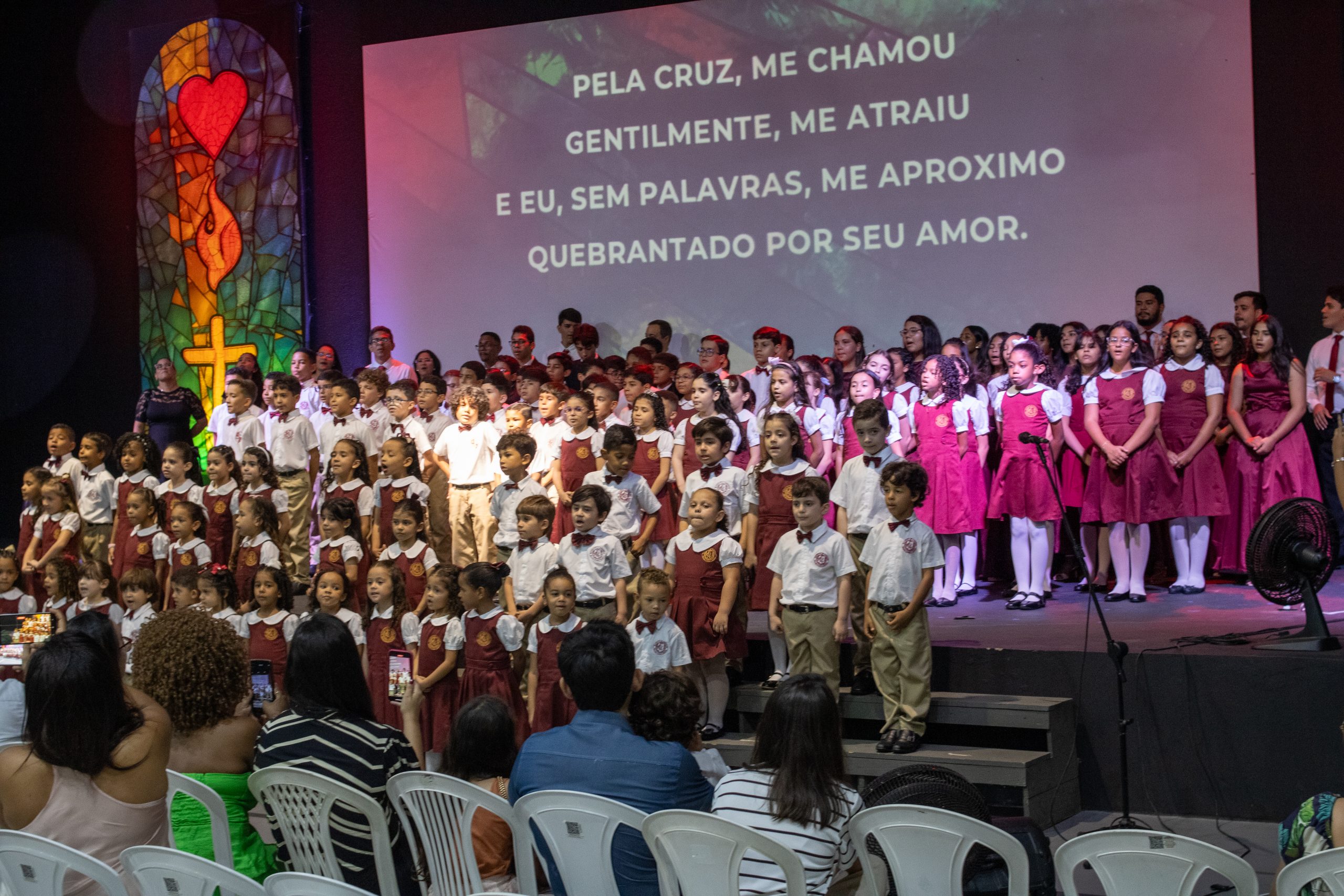
We grew from just three schools in 2019 to a total of 37 in 2025. It may seem like a modest number, but it represents over five thousand students being educated for the glory of God across every region of Brazil—from North to South. And there are many more! We are merely a few soldiers in the great army the Lord is raising up in our generation. Other people, many of whom we have not yet met, are developing similar initiatives all over the country.
This confirms the conviction that the time has come! We must rally the troops, inspire our people, prepare the soldiers, and, by God’s grace, change the tragic course of our Brazilian education. In this context of growth, the International Classical Christian Alliance (ICCA) is a concrete answer to our prayers and deepest hopes. Under the leadership of the Association of Classical Christian Schools (ACCS), the ICCA brings together national organizations from many countries, united in their commitment to support schools, equip leaders, train educators, and share pedagogical resources consistent with a Reformed Christian worldview.
It was in this spirit of unity and mission that, in July 2025, the Associação de Escolas Clássicas do Brasil (ACCS Brasil) was born. The result of cooperation among Brazil’s five pioneering classical Christian schools—Instituto Trinitas (São Paulo), Colégio William Carey (São Paulo), ECMA (Piauí), and Colégio Virtus (Brasília)—this alliance aims to strengthen connections, guide new initiatives, train educators, and, above all, bear clear witness to the rich and transformative legacy of Classical Christian Education. It is time to move forward, and continue to build upon the cornerstone that is Christ—the firm foundation of all true education.
Today we know who we are, we know whom we serve, and we are aware of the enemy’s strategy. That’s why we rise up, ready to fight the fiercest battles for the hearts and minds of our fellow Brazilians and brothers in Christ.
Espérance was the name of the ship that brought the Huguenots to Guanabara Bay. “Hope” in Christ remains our warship—now charting a new course toward a redeemed cultural mandate. Our mission is not merely about giving our children a good education, but to train them to love God above all things—so that, at the end of their lives, they may truthfully say that they fought, they labored, and they lived—by the power of God—for Christ and His Kingdom. ✤
To know more about ECMA and donate for its expansion access, visit: www.ecmafloriano.org/swordsandshovels.
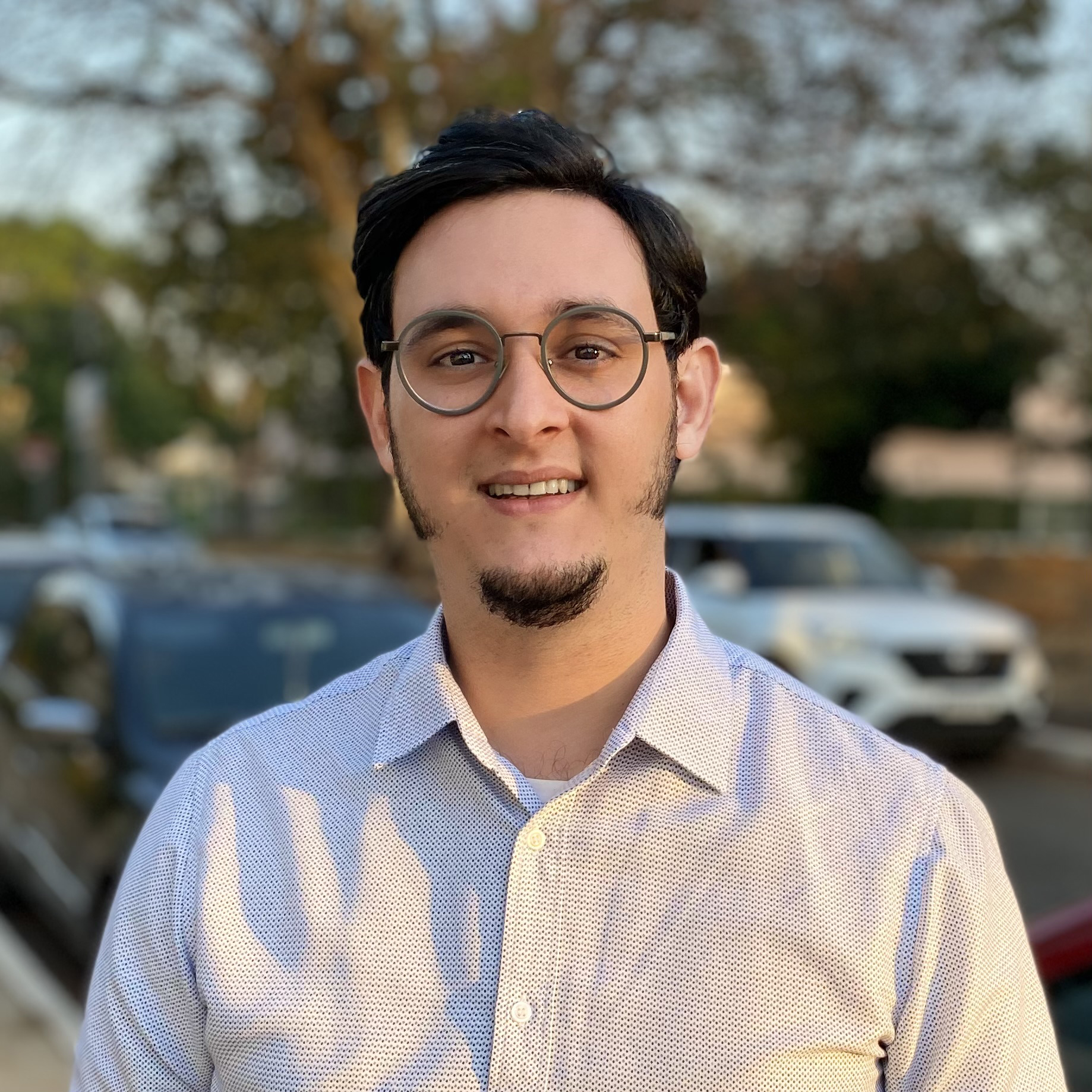
Pr. LUCAS EVANGELISTA lives in Brazil, where he co-directs Classical Press, a publishing house dedicated to translating and adapting truly classical and distinctly Christian education resources into Portuguese. He directs Escola Cristã Mercês Alencar—one of Brazil’s pioneering classical schools—and serves as a Baptist pastor. He and his wife, Natalia, cultivate a home of reading, discipleship, and hospitality, seeking to form the next generation to think wisely and speak with eloquence. Instagram: @classicalpress; YouTube: @classicalpress and @QuintessênciaPilgrim.